
Days casino Plinko
Introduction
I look at Plinko very differently from the way many casual players first encounter it. On the surface, Days casino Plinko seems almost too simple to deserve a serious breakdown: you set a stake, choose a risk level, drop a ball, and watch it bounce through a field of pins until it lands in a payout slot. That simplicity is exactly why the format gets attention so quickly. It removes the visual noise of a classic slot and replaces it with a direct, easy-to-read chain of cause and effect.
But the practical reality is more interesting than the interface suggests. Plinko is not just a stripped-down casino game with a clean layout. It is a probability-driven format where pacing, variance, and emotional rhythm are exposed in a way that many slot players are not used to. At Days casino, the appeal of Plinko comes from this contrast: the rules are easy to understand in seconds, while the actual session can feel calm, frustrating, exciting, or brutally swingy depending on the settings chosen before the first drop.
That is why this page matters. A player who understands how Plinko works in practice will approach it very differently from someone who sees only a quick, visual game with instant results. My goal here is to explain what Days casino Plinko really offers, how its logic works, where the pressure points are, and who is likely to enjoy it over time.
What Plinko is and why it stands out so quickly
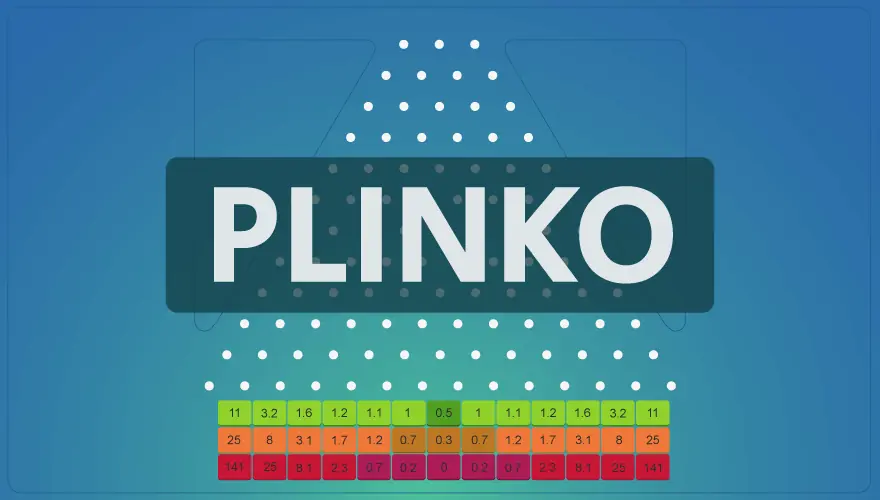
Plinko is a ball-drop gambling format built around a vertical board filled with pegs. Each ball released from the top collides with those pegs and gradually moves left or right until it reaches one of several multiplier slots at the bottom. The final slot determines the return on that individual drop. That core loop is simple enough for a first-time player to grasp immediately, which is one of the main reasons the format has become so visible across modern casino platforms.
What makes Days casino Plinko noticeable is not only the visual clarity of the board, but the way it turns randomness into something the player can watch unfold in real time. In a slot, the mathematics are hidden behind reels, symbols, and bonus logic. In Plinko, the path is visible. You see each bounce. You feel each near miss. And because the movement appears physical, many players instinctively read meaning into it, even though the outcome still follows the game’s underlying random logic.
That last point is important. One of the most memorable things about Plinko is that it often feels more “interactive” than it really is. You are not steering the ball. You are choosing conditions: stake size, board setup, and risk profile. After that, the drop plays out on its own. The tension comes from visibility, not control.
In practical terms, this makes Plinko attractive to players who want quick outcomes, low friction, and a direct connection between decision and result. It also explains why some players stay with it longer than expected. There is no need to learn paylines, symbol values, expanding wilds, or layered bonus rules. The game gets to the point immediately.
How the core Plinko system works at Days casino
To understand Days casino Plinko properly, I think it helps to break the session into four simple inputs: your bet amount, the number of rows on the board, the selected risk level, and the number of drops you choose to play. Everything that follows is shaped by those settings.
When a ball is released from the top of the board, it hits a sequence of pins. At each collision, it deflects left or right, gradually building a path toward the bottom. The middle slots usually carry lower multipliers and appear more frequently, while the edge slots tend to carry the highest multipliers but are reached less often. This distribution is not random in the everyday sense of “anything can happen equally.” It is weighted. Central outcomes are common. Extreme outcomes are rare. That is the mathematical backbone of the format.
The risk setting changes how sharply the payout distribution is arranged. On lower risk, the board tends to pay more moderate returns with fewer dramatic spikes. On higher risk, the center may become less rewarding and the edge multipliers more aggressive, which means the session can produce more dead drops and occasional standout hits. The game is not changing its basic structure; it is changing the balance between frequency and payoff size.
Rows matter too. A board with more rows gives the ball more bounce points before it lands. That usually creates a broader spread of possible paths and can alter how often the ball reaches certain zones. For the player, this does not mean “more rows equals better value.” It means the rhythm and outcome profile can feel different, sometimes noticeably so.
| Setting | What it changes | What it means in practice |
|---|---|---|
| Bet size | The cash value of each drop | Directly affects bankroll pressure and session length |
| Risk level | Payout distribution across the board | Lower risk tends to smooth results; higher risk increases swings |
| Rows | The number of bounce decisions before landing | Can change the feel of the board and spread of outcomes |
| Auto-play or repeated drops | Session speed | Can accelerate losses or compress variance into a short period |
One observation I keep coming back to is this: Plinko often looks like a toy and behaves like a volatility engine. That mismatch is a major part of its appeal, but it is also where many players underestimate it.
Why the game feels engaging and how the session tempo develops
Days casino Plinko is built around short feedback loops. Every drop resolves quickly. There is almost no downtime, no long animation sequence, and no complicated result screen to decode. That creates a rhythm that feels efficient and, for many players, unusually satisfying. You place a bet, you watch the path, you get the result, and you decide again.
The speed of that loop matters more than it may seem. In a slot, the entertainment often comes from anticipation built through spinning reels, sound design, and the possibility of a feature round. In Plinko, the anticipation sits inside a few seconds of visible movement. The ball can drift toward a high multiplier, bounce away at the last moment, and create a stronger emotional reaction than a routine losing spin on a slot.
This is one reason the format can hold attention so effectively. The result is not merely delivered; it unfolds in front of you. Even though the drop is short, it has a beginning, middle, and end. That structure gives each round a miniature narrative arc.
At the same time, the tempo can become deceptive. Because each round is fast and easy to repeat, players can move through a bankroll much faster than they expect. This is especially true when auto-play is enabled or when the stake feels small enough to seem harmless. A one-dollar drop repeated dozens of times in a short session can still create meaningful exposure, particularly on higher-risk settings.
In my experience, Plinko works best for players who actively control session pace rather than letting the pace control them. The game is smooth enough to encourage repetition, and that is not automatically a benefit.
Understanding probability, variance, and real-session outcomes
If there is one thing a player should understand before launching Days casino Plinko, it is that visible motion does not make the result more predictable. The ball’s path may look intuitive, but the outcome distribution remains rooted in probability. Most drops are designed to cluster around common zones, while the standout multipliers sit on the edges and appear much less often.
This means a session can contain many low-return or break-even style results before a major multiplier appears, if it appears at all. Players who approach Plinko expecting a steady stream of strong returns usually misread the format. The game is often about absorbing ordinary outcomes while hoping that a rare hit offsets them.
That dynamic becomes more pronounced when the risk level is set high. The top multipliers become more attractive, but the road toward them gets harsher. You may see long stretches where the board repeatedly lands in low-value slots. When the big result finally arrives, it can reshape the session. But there is no guarantee that it will arrive within your bankroll window.
This is where practical bankroll planning matters. Plinko is easy to start but not always easy to pace correctly. The game can produce two very different experiences depending on how it is played:
Controlled session: modest stake, limited number of drops, measured risk setting, clear stop point.
Impulse session: repeated drops, rising stakes after misses, high risk selected for excitement, no fixed budget.
The first approach gives the format room to be entertaining without becoming chaotic. The second often turns a simple game into a very expensive lesson in variance.
Another useful observation: Plinko can feel “due” after many weak outcomes, but that feeling is psychological, not mathematical. A rare edge hit does not become more likely just because the previous ten drops were poor. This is one of the most common traps in fast, repetitive gambling formats.
How risky Plinko really is and who is likely to enjoy it
I would not describe Days casino Plinko as uniformly risky or uniformly mild. Its character depends heavily on configuration. On lower-risk settings, the game can behave like a relatively steady, low-complexity format with frequent but modest returns. On higher-risk settings, it can become one of the more swing-heavy options in a casino lobby, especially when combined with fast repeated drops.
That flexibility is part of the design strength. It allows different player types to approach the same board in different ways. But it also means the label “Plinko” tells you less than many people assume. Two players can both say they played Plinko and have completely different experiences because they chose different row counts, stakes, and risk profiles.
The format is usually a good fit for players who enjoy:
quick round resolution;
simple rules without long onboarding;
clear visual feedback;
adjustable session intensity;
the possibility of rare but noticeable multiplier hits.
It may be a weaker fit for players who prefer:
story-driven bonus rounds;
symbol collection systems or layered slot features;
deep strategic decision-making;
slower pacing with more time between results;
a stronger feeling of progression during a session.
If I had to summarize the player profile in one line, I would say this: Days casino Plinko suits people who enjoy clean, immediate gambling logic more than decorative casino presentation.
What players should know about rhythm, expectations, and payout patterns
A common mistake is to judge Plinko after only a handful of drops. Because the board is so easy to read, players often believe they understand the pattern almost instantly. In reality, short samples can be misleading. A few decent multipliers early in a session can make the format seem softer than it is. A cold opening can make it look harsher than it is. The true nature of the board shows itself over volume, not over five or ten drops.
This matters because Days casino Plinko tends to compress emotional swings. You can experience optimism, frustration, relief, and overconfidence in a very short period. The game does not need a long bonus sequence to create tension; it does it through repetition and visible near-misses. A quick read of Days Casino blackjack overview for players answers most questions about limits and account settings.
There is also a practical detail many players overlook: low multipliers are not the same as meaningful recovery. A drop that returns a fraction of the stake may soften the loss, but it does not change the overall direction of the session. When players see frequent “something back” results, they sometimes read the session as healthier than it really is.
That is why I recommend looking at Plinko in terms of session flow rather than isolated moments. Ask simple questions: How fast is the bankroll moving? Are the moderate outcomes actually sustaining play? Has the chosen risk level produced the kind of experience you wanted, or only more tension?
| Session element | Low-risk setup | High-risk setup |
|---|---|---|
| Outcome frequency | More stable middle-zone landings | More uneven distribution |
| Bankroll pressure | Usually lower per sequence of drops | Often higher due to dry stretches |
| Emotional feel | Calmer, more measured | Sharper tension and stronger swings |
| Best suited for | Players testing the format or preferring steadier play | Players specifically seeking volatility and rare larger hits |
One of the sharper truths about Plinko is that it can be entertaining even when it is not especially rewarding. That is not a criticism; it is part of the product design. The visible path and quick resolution create engagement independently of outcome quality.
How Plinko differs from slots and other casino formats
Comparing Days casino Plinko with classic online slots is useful because many players arrive from that category first. The biggest difference is structural. A slot is usually built around hidden mathematics wrapped in symbols, reels, paylines, and feature rounds. Plinko strips all of that away. There are no wilds to track, no paytable combinations to memorize, and no bonus buy-style complexity in the core loop.
That makes Plinko more transparent in one sense and less textured in another. You can see the board and understand the broad shape of the outcome distribution. But you do not get the layered progression that many slots use to sustain interest over longer sessions.
Compared with roulette, Plinko shares the appeal of quick outcomes and a strong connection to probability, but the visual experience is different. Roulette resolves in a single decisive landing. Plinko builds suspense through a sequence of bounces. Compared with crash-style formats, Plinko is less about timing a Days Casino withdrawals details before claiming bonuses or depositing and more about accepting the board’s final destination. Compared with table games like blackjack, it offers far less decision depth but also far less learning friction.
From a player’s point of view, the distinction is practical:
Slots offer more thematic variety and feature depth.
Table Days Casino games guide before choosing a real money casino often reward knowledge and discipline more directly.
Plinko delivers speed, clarity, and adjustable variance in a very concentrated form.
That concentrated form is exactly why some players love it and others lose interest quickly. If you want elegant simplicity and immediate results, Plinko can feel refreshingly direct. If you want richer game architecture, it may feel too bare.
Practical strengths and weak points of Days casino Plinko
I think the strongest part of Days casino Plinko is that it communicates its identity honestly. It does not pretend to be a strategic game. It does not bury the experience under decorative systems. It gives the player a board, a stake, a risk choice, and a result. That clarity has real value.
Its main strengths include:
Fast understanding: even a new player can grasp the format almost instantly.
Visible randomness: the path of the ball makes each round easy to follow.
Flexible intensity: risk settings can materially change the session feel.
Short round cycle: useful for players who dislike slow setups and long animations.
Clean decision points: stake and risk matter in a way that feels direct.
Its weaker points are just as real:
Limited depth: after the first few minutes, the format does not reveal many new layers.
High repetition: the same action loop can become monotonous for some players.
Easy overspeeding: fast drops can drain a bankroll before the player fully registers it.
Misleading sense of control: watching the ball move can create false confidence about patterns.
Sharp variance on aggressive settings: standout multipliers can be offset by long dry sequences.
One thing I particularly notice with Plinko is that the simplicity can either be its greatest advantage or its main limitation, depending on the player’s expectations. If someone wants a clean probability toy with real-money stakes, it works. If someone wants an evolving casino session with layered mechanics, it may feel thin.
What to check before starting a Plinko session
Before launching Days casino Plinko, I would focus on a few practical checks rather than abstract ideas about luck. These points make a real difference to the quality of the session:
Test the risk level first. A conservative setup and an aggressive setup can feel like different products. Do not assume the default setting matches your tolerance.
Scale the stake to the speed of play. Because rounds resolve quickly, even modest bet sizes can add up faster than expected.
Decide whether auto-play helps or harms your discipline. For some players it keeps the session structured; for others it removes the pause needed to stay in control.
Use demo mode if available. It is one of the easiest ways to understand how different board settings affect the feel of the session without financial pressure.
Set a stop point before chasing edge multipliers. Rare top-end outcomes are exciting precisely because they are rare.
I would add one more practical note. If you find yourself increasing the stake mainly because several weak drops “must” be followed by something better, that is a sign to stop. In Plinko, that mindset appears quickly because the rounds are short and visually persuasive.
Final verdict on Days casino Plinko
Days casino Plinko offers a very specific kind of gambling experience: fast, visual, easy to understand, and highly sensitive to risk settings. Its core strength is clarity. You do not need to decode a complex paytable or wait for a feature round to understand what is happening. The game puts probability, pacing, and session control right in front of you.
That does not make it simple in the practical sense. The interface is simple. The emotional experience is not always simple. Depending on how you configure the board, Plinko can feel steady and casual or sharp and punishing. That range is one of its biggest advantages, but it is also where caution is needed. A player who ignores stake sizing and session speed can move from entertainment to overexposure very quickly.
For players who value immediate results, visible action, and adjustable variance, Days casino Plinko is a strong format worth trying. For players who want richer mechanics, more strategic involvement, or slower progression, it may not hold attention for long. In other words, Plinko does not try to be everything. What it really offers is concentrated randomness with a clean presentation. If that sounds appealing, it can be very effective. If not, its honesty is still a virtue: you know what you are getting almost immediately.
FAQ
How does Plinko work on Days and what happens after the ball lands?
A ball is dropped from the launcher and bounces down through the board. Each bounce sends it toward different slots at the bottom, where the payout multiplier is determined. The risk level changes with the way the stake is set and the multiplier table for the chosen mode.
What should a beginner check before the first real-money drop?
Select the stake for the session and confirm the chosen game mode before pressing Drop. Review the multiplier scale and volatility indicator shown for Plinko, since payouts vary by slot outcomes. If an option for demo mode is available, try a few drops to understand the pace.
Where can the game lobby be accessed when someone only wants Plinko and not other casino games?
Plinko appears directly in the game lobby section and stays focused on the selected game. From there, the player can start real-money play or switch to demo mode depending on the available buttons. If there are multiple Plinko variants, the lobby lets the player choose the one displayed next to the Drop button.